
September 9th-September 14th:
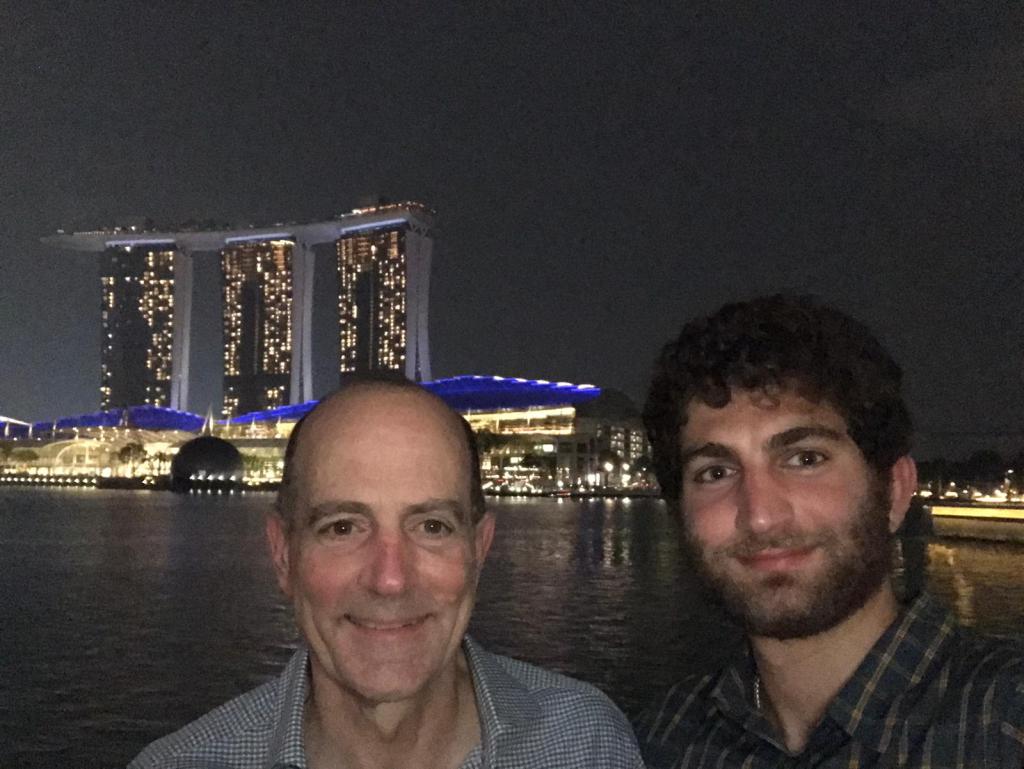
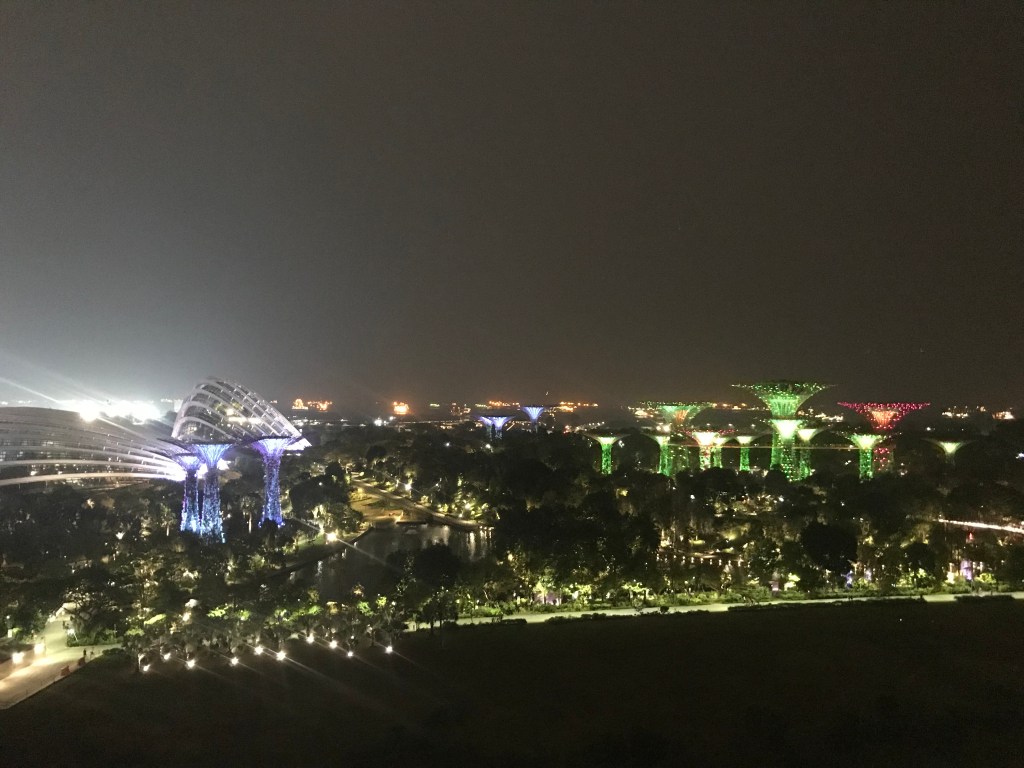
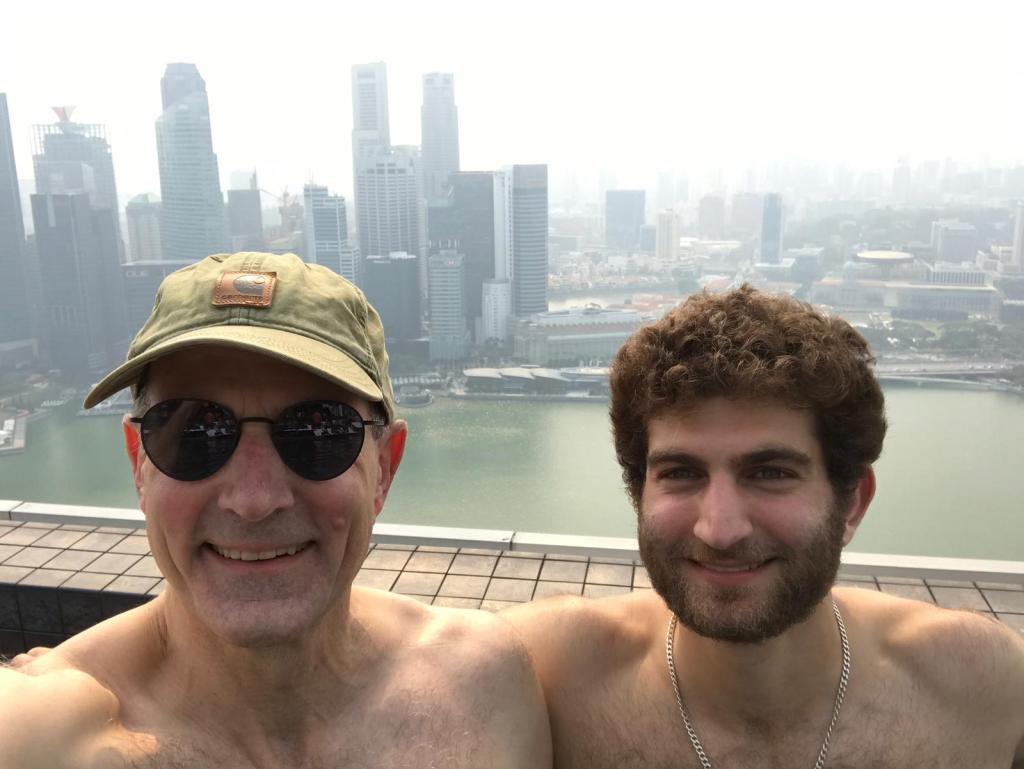
Arriving in Singapore from Nepal on the morning of Monday, September 9th, I spent the week recovering from altitude sickness and regaining my strength as I looked towards my planned trip to Bhutan at the end of the week. Coincidently, my dad happened to be coming through Singapore on a business trip towards the end of the week, and we were able to grab drinks one night and enjoy an afternoon/evening sightseeing and relaxing at the iconic Marina Bay Sands hotel the next day.
Sunday, September 15th:
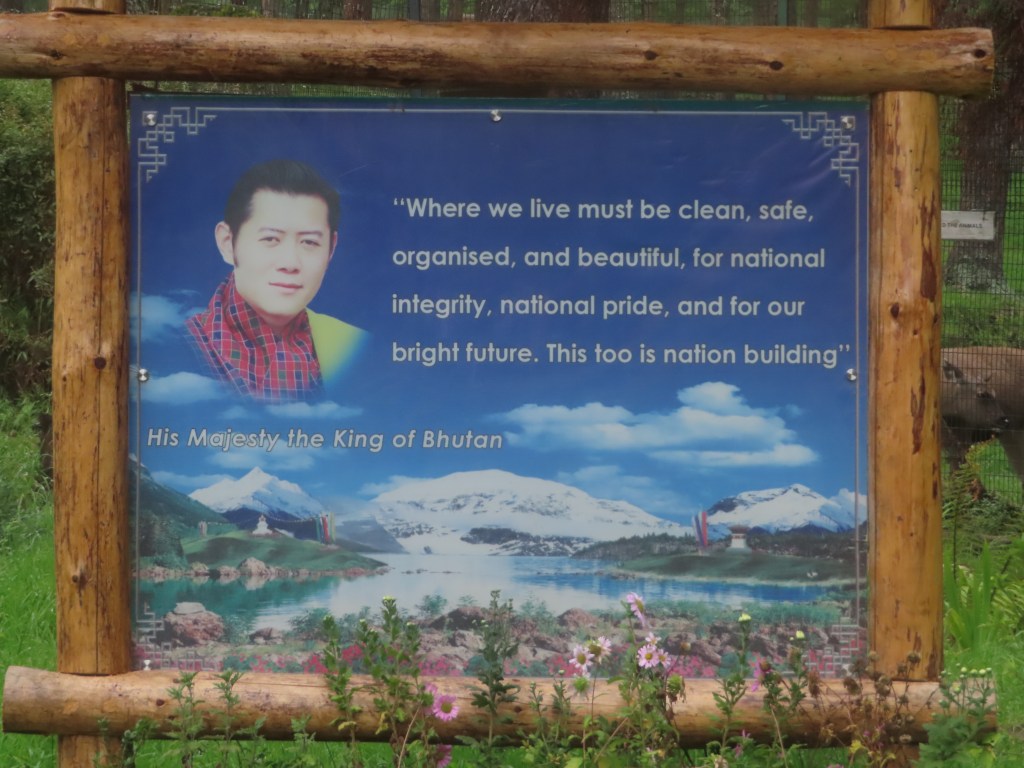
After a week of rest and good food, I was ready to resume my adventure and travel (back to altitude) in Bhutan. Bhutan is a small mountain kingdom to the Northwest of India and south of Tibet. It has never been conquered and pursued a policy of complete isolation from the world until the 1960s. Following the annexation of Tibet by China in the late 1950s, the King of Bhutan recognized the countries vulnerability as an isolated state of ~700,000 people. He began to slowly open up the country to the world, joining the United Nations and NATO as well as initiating a hydropower partnership with India. In addition, on the tourism front, the country decided to take a unique path aimed at preserving the culture and environment of the nation while also opening it up slowly to development. Beginning in the 1970s, Bhutan began allowing in a limited number of “high value” tourists, instituting a strict minimum daily spend that has allowed the country to profit from tourism without seeing the crowds or environmental/cultural degradation that tourism has brought to similar countries. In addition, the country controls tourism by requiring visitors to arrange travel through a government sanctioned agency and be accompanied by a guide while in the country.
With the advent of tourism (~50,000 international tourists visit a year) and growing relationships with the rest of the world, Bhutan has begun to modernize as is evidenced by improved infrastructure, internet reaching 40% of the country and running water/electricity/cell service nearly covering the entire country including the most remote villages. Despite the movement towards modernization, Bhutan has retained its Buddhist culture and commitment to the environment (the country is carbon negative and ~70% of the land is protected forest land). This has been aided by a policy of prioritizing “Gross National Happiness”, which might be more accurately translated as “Gross National Harmony” over GDP growth. In fact, the government measures their citizens happiness through a nationwide survey every few years, and all government policies are vetted based on their contribution to this measure. This is not to say that Bhutan is the “happiest country in the world”, although it is marketed as such, but it is clear that Bhutanese society operates with a degree of harmony unheard of in most countries.
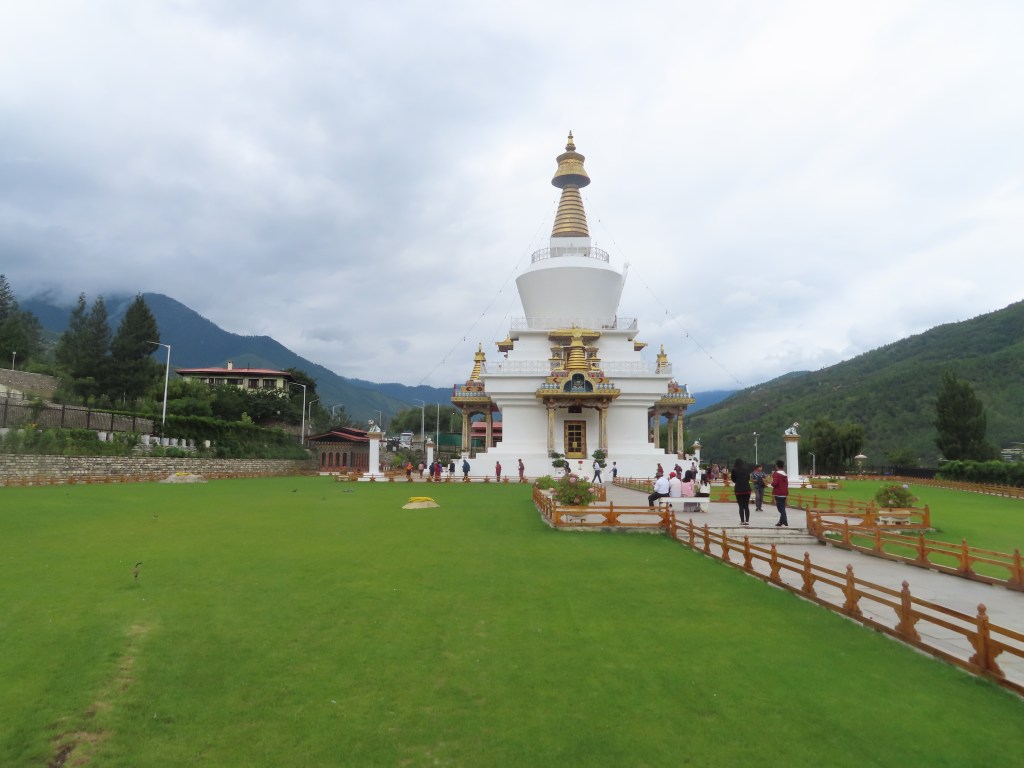
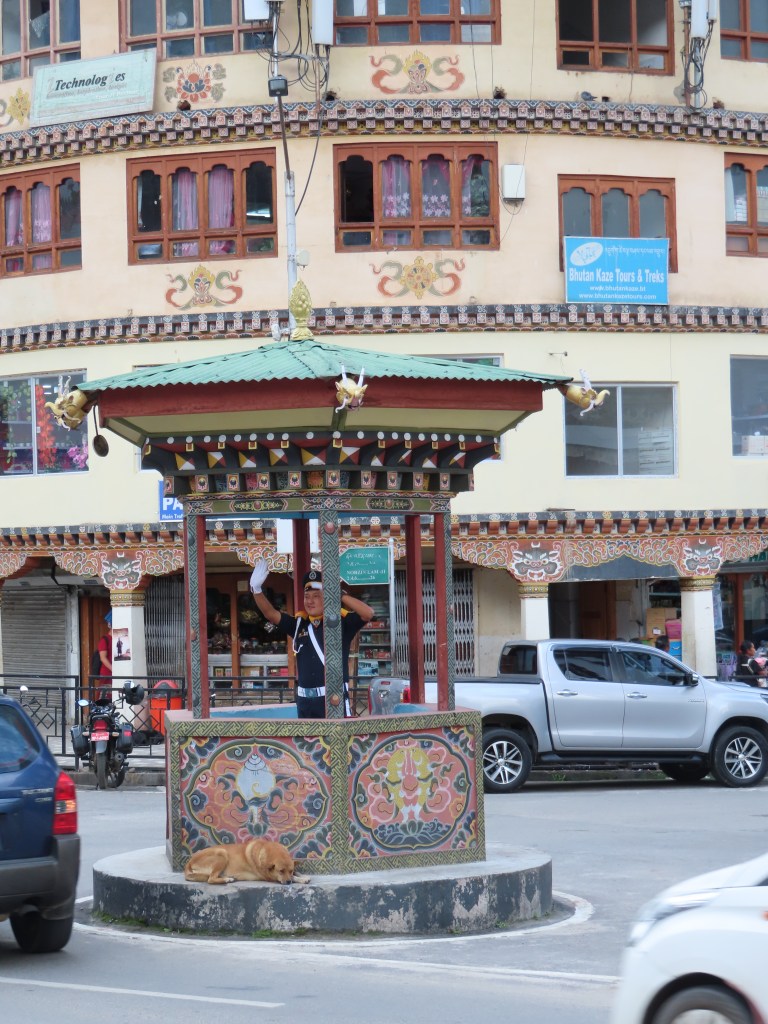
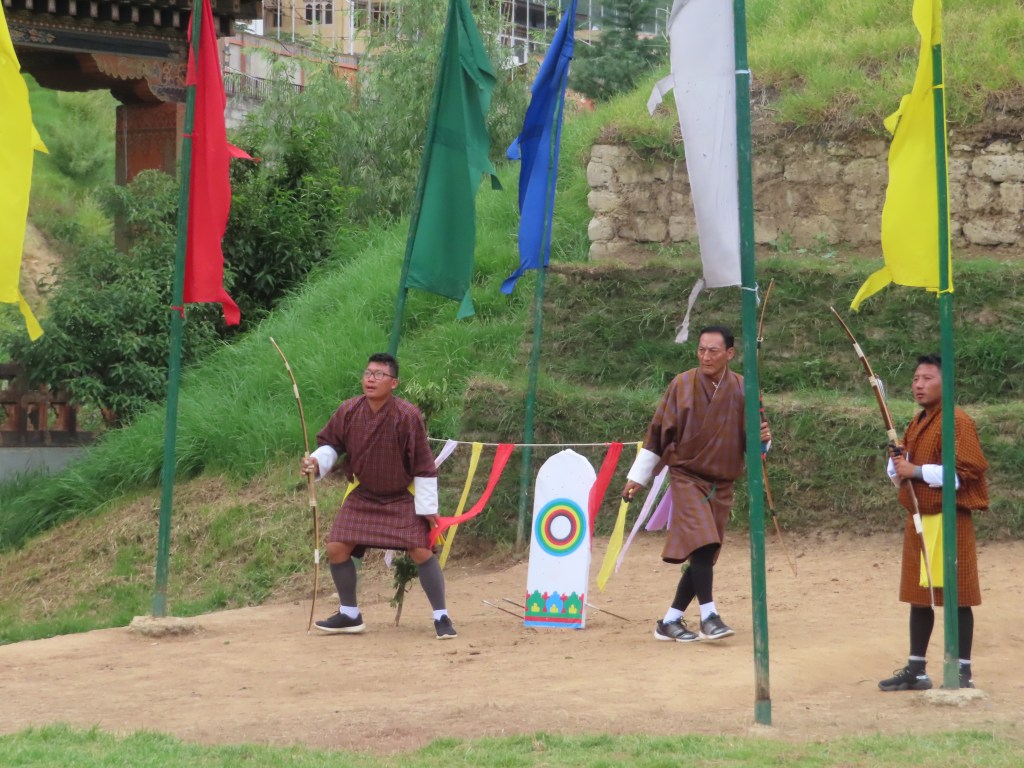
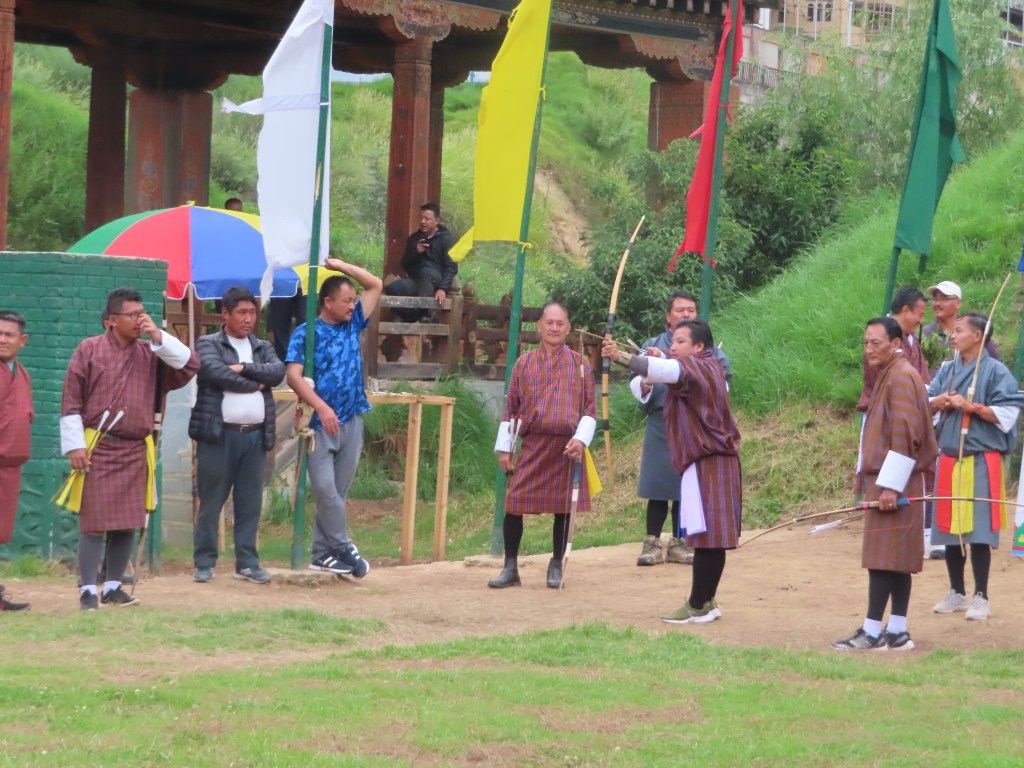
After a five hour flight from Singapore to Bhutan on Druk air, one of Bhutan’s two airlines, that featured a connection in Northern India, I arrived in Paro. Meeting my guide Tashi and driver Kumar, we set off on the winding mountain road towards Thimphu, the capital city. After a traditional Bhutanese lunch heavily featuring potatoes, hot chili and cheese, we stopped at the local market and drove through the downtown. Notably absent were traffic lights, instead at the biggest intersection a policeman directed traffic from a podium. We also visited the memorial Stupa, a temple dedicated to the late third king of Bhutan who ushered in the age of modernization in the 1960s. The highlight of the day was a visit to the archery grounds to witness Bhutan’s national sport.
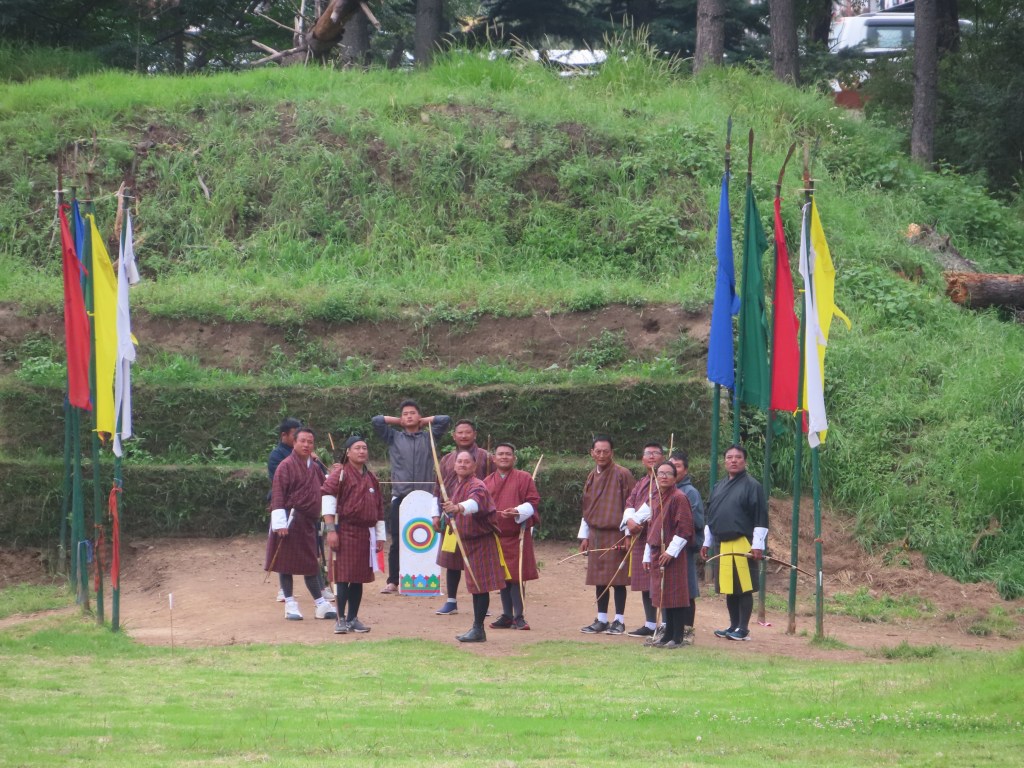
Archery in Bhutan encompasses two disciplines. The first is the more common modern archery where Bhutanese compete in Olympics with modern compound bows. The second is the traditional archery competition, which is more unique to Bhutan (and arguably more interesting). In the traditional competition, villages compete against each other, lining up on opposite sides of a field to hit a small target ~450 feet away. Traditional wooden bows are used, and there is little opportunity to aim as the torque from the bow is too great to pause in the middle of a shot. This leads to a fairly nonchalant atmosphere as archers casually fire arrows across the field seemingly without aiming. Adding to the spectacle, the opponents yell across the field to mock the shooter while standing in front of the target. Most scurry out of the way as the arrow approaches, but there is occasionally a bolder competitor who confidently stands still and watches the arrow fly past. Given the lack of aiming and the immense distance, it is rare to hit the target and there can be upwards of 30 shots between successful hits. When the team does hit a target, it is immediately evident as they break into a choreographed celebration dance. While watching the competition, I was fortunate to see a number of successful shots (and subsequent celebrations), while avoiding any close calls as the archers kept their arrows relatively on target and away from the stands.
Monday, September 16th:
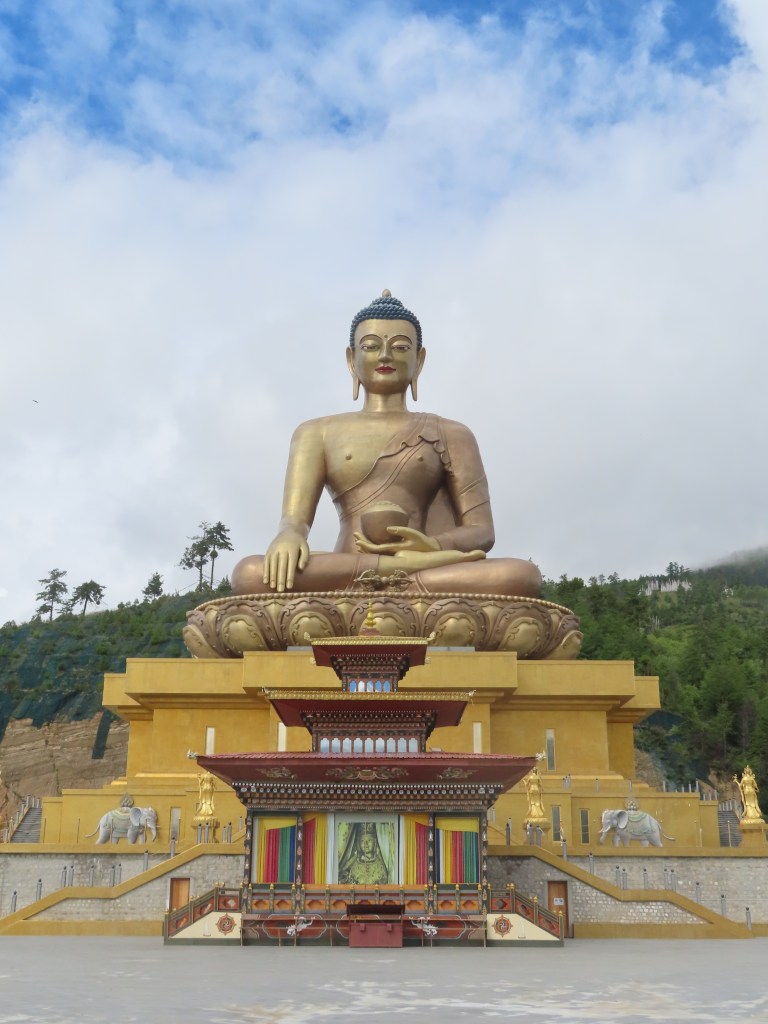
After a good nights rest to recover from the early morning flight and time difference, we set out on our whirlwind tour of the capital city of Thimphu. Beginning with the most iconic/visible sight, we drove up into the hills surrounding the city to visit the giant golden Buddha statue. At a height of nearly 200 feet, the statue was truly impressive as was the beautiful temple inside.
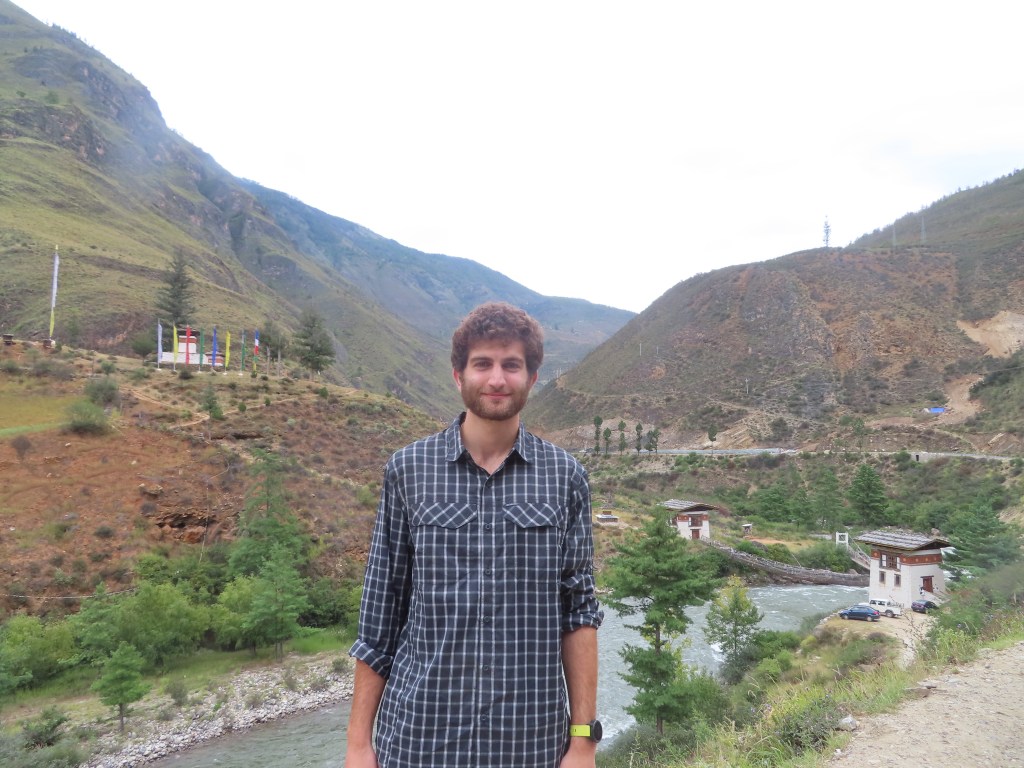
Next, we set off on a short hike from the statue, walking along a ridge that offered beautiful panoramic views of the city. Along the way, we encountered countless stray dogs and wandering cattle, a preview of the vast quantity of animals roaming the cities, highways and rural villages.
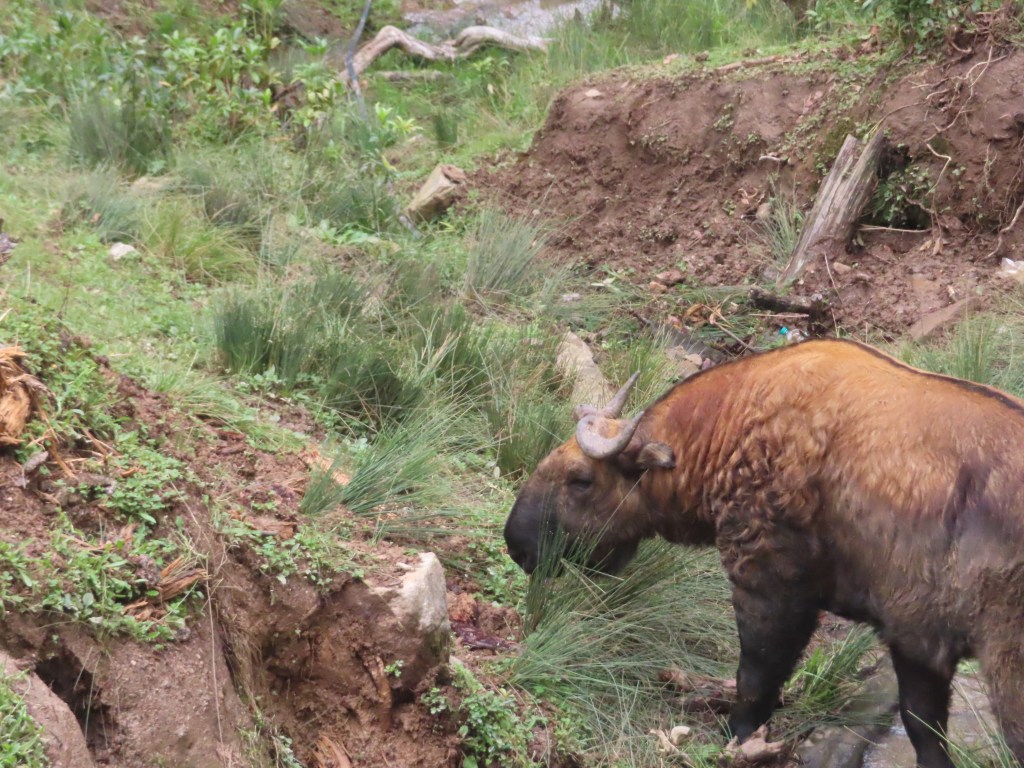
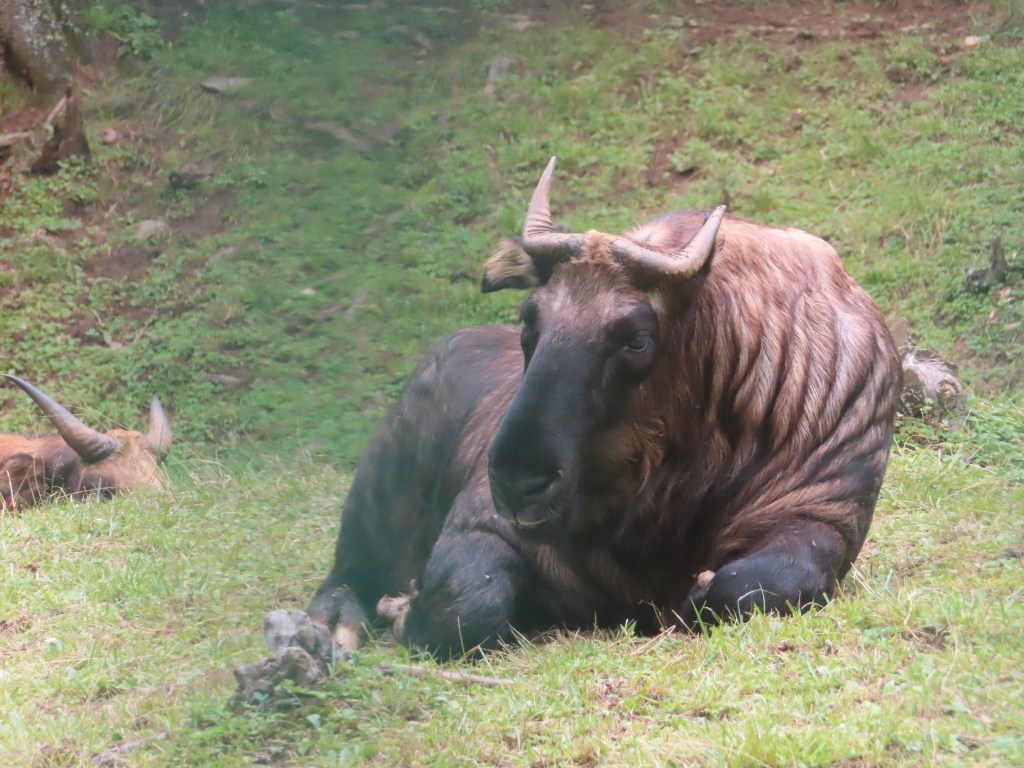
Following the hike, we visited a whirlwind of temples, factories (including a hand-made paper factory) and temples/monasteries. We also caught a glimpse of the Takin, a strange looking cow-like creature that is Bhutan’s national animal. Often found at high elevations (over 13,000 feet), there is a rescue reserve for Takin and deer found in the aftermath of wildfires on the outskirts of the capital, allowing a close up view of the odd animal.
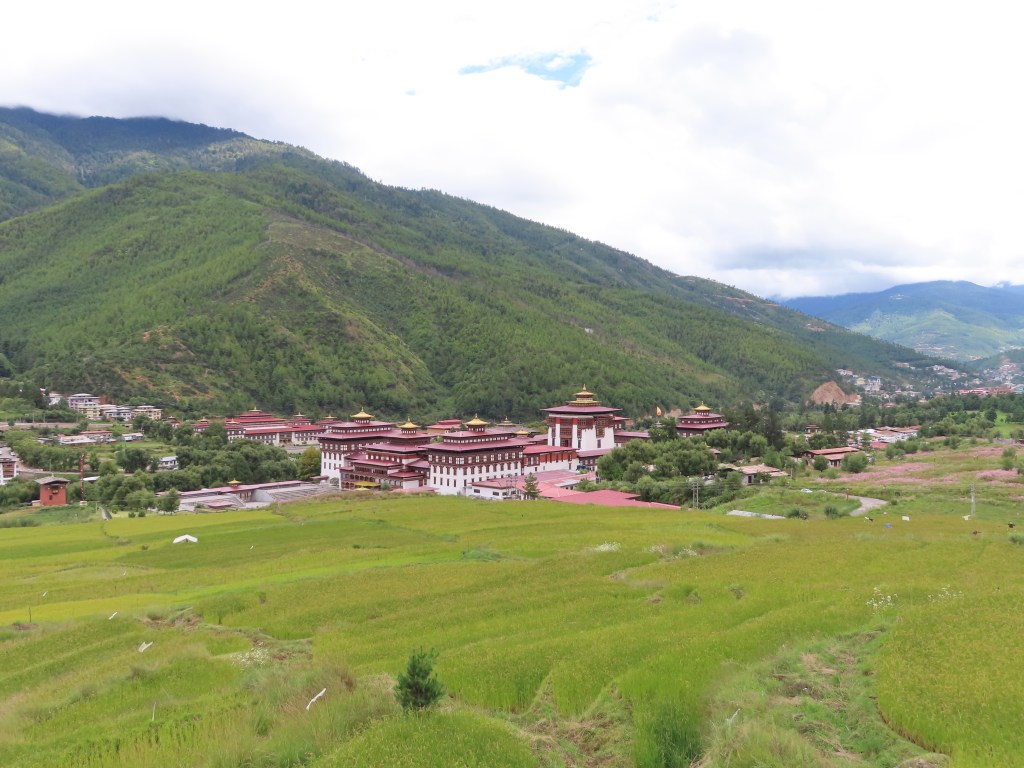
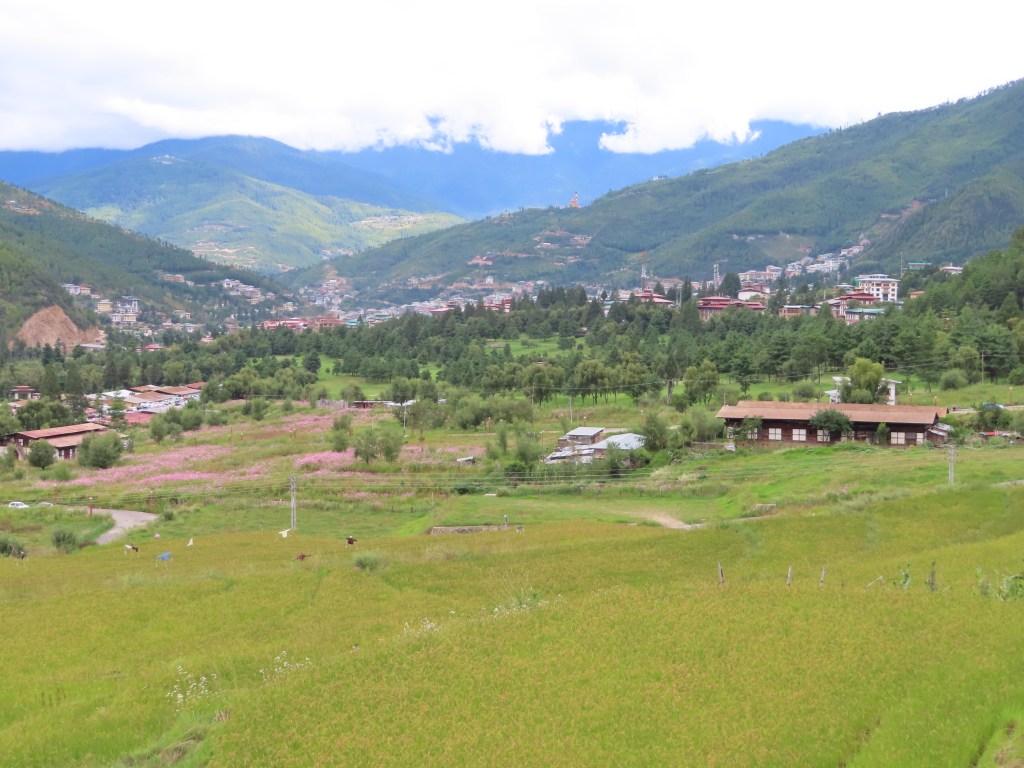
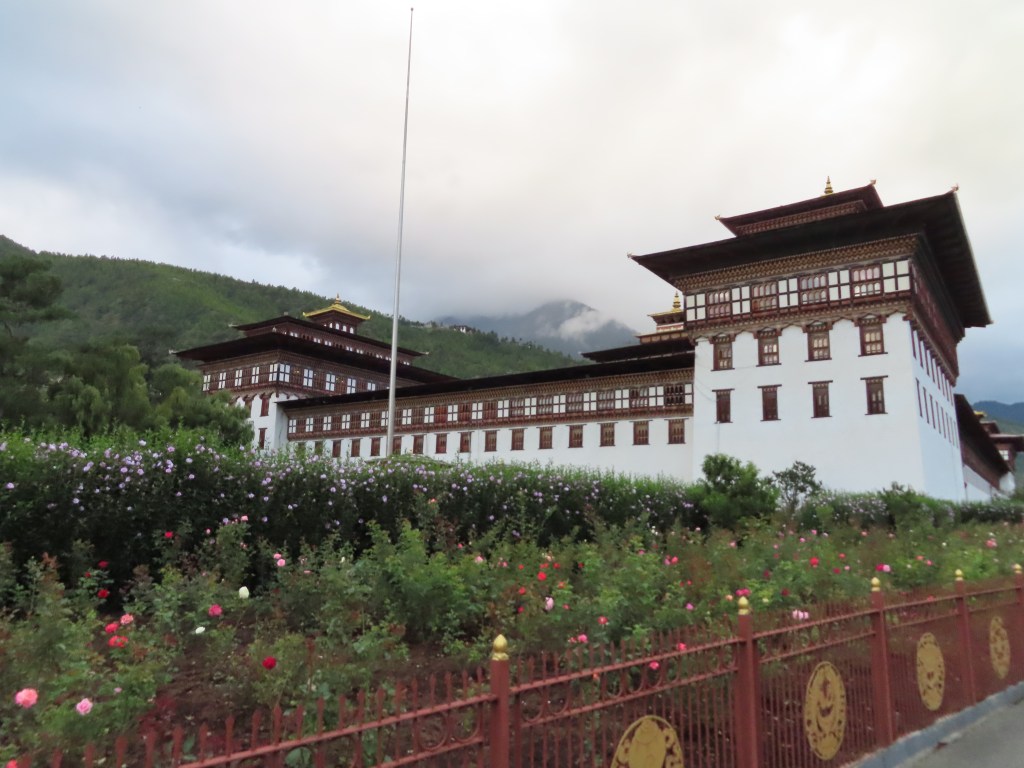
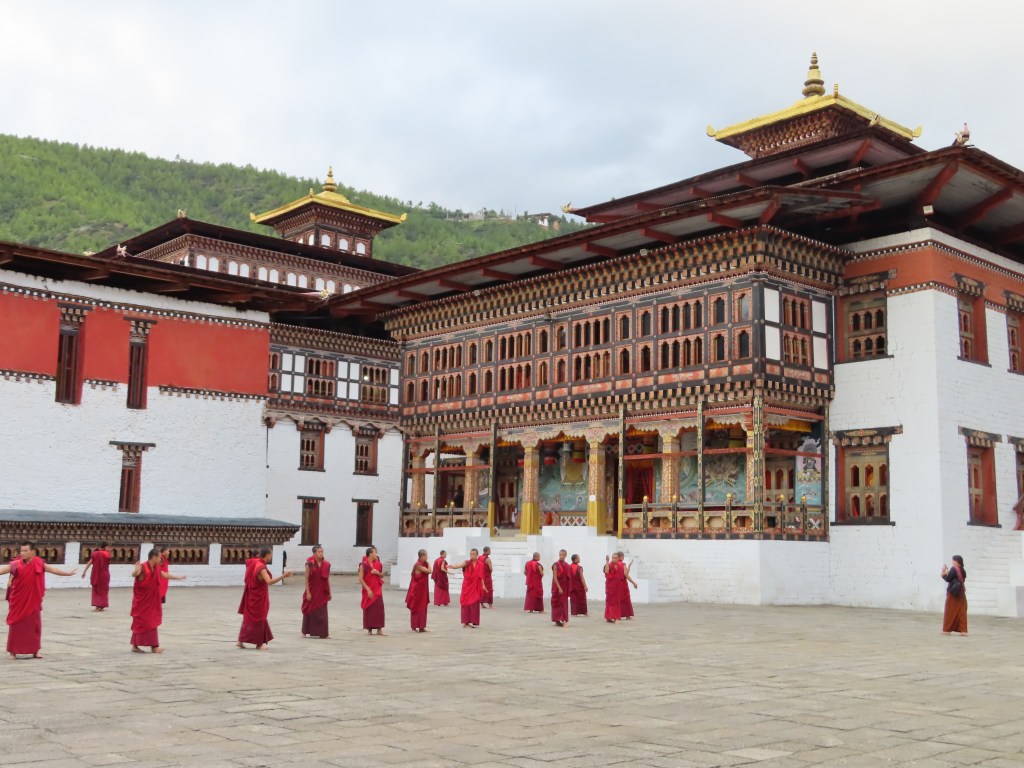
The highlight of the day was a visit to the fortress which houses both the monk and government authorities. Each major center in Bhutan has a fortress and by law they are each split along the middle between civil and religious authority. Next to the fortress, we also caught a glimpse of parliament and the King’s palace. The parliament is notable as Bhutan became a parliamentary democracy in 2008. Unlike the traditional path to democracy that often features protests and/or the overthrow of a monarch, Bhutan’s King decided that it was time for Bhutan to become a democracy. At first, the country was uncomfortable with the idea and only after the King went from village to village to talk with the people (a possibility in such a small country) did the country become more comfortable with the idea. Even now, the King retains some power and is able to name ~10% of the legislature, but otherwise the path to democracy has gone relatively smoothly.
Tuesday, September 17th:
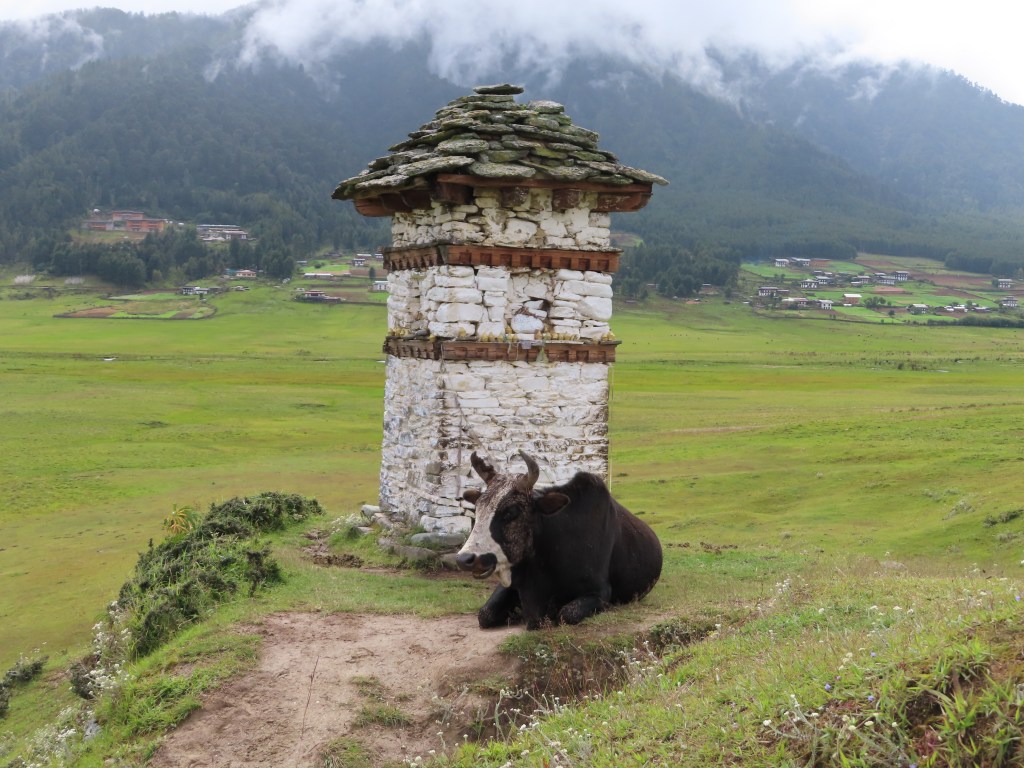
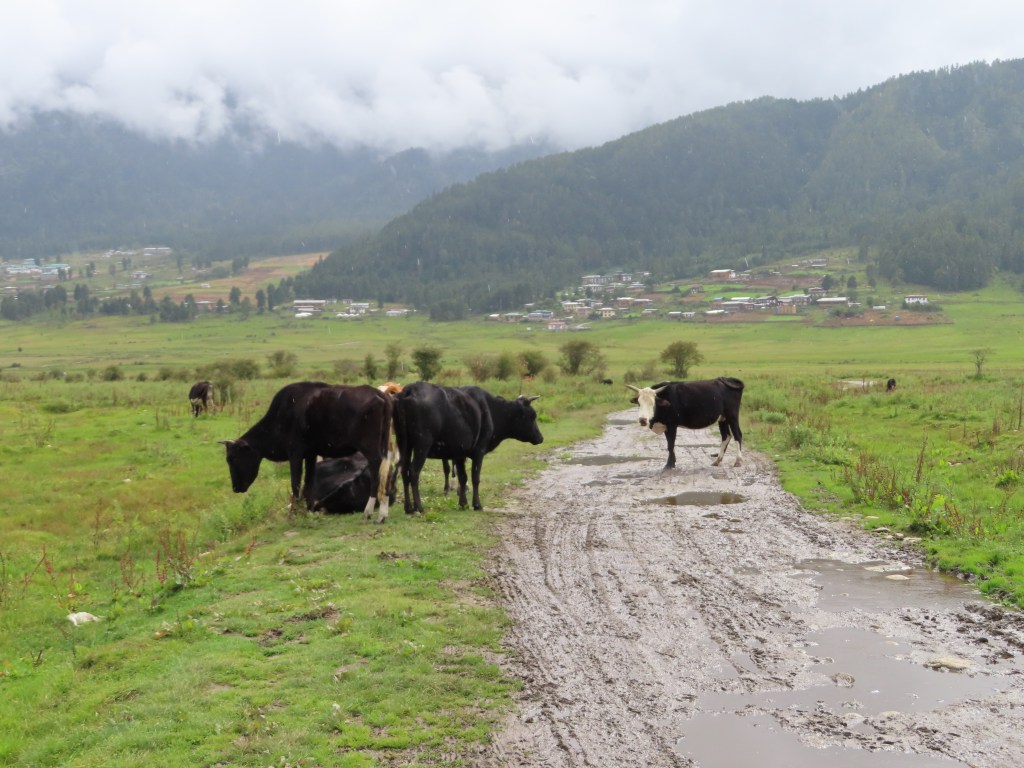
Leaving the confines of the “big city”, we wound our way through the mountains towards the center of the country and the Phobjikha valley. While there has been significant improvements in the quality of the roads of Bhutan over the past 20 years (aka now mostly paved), the winding highway is a far cry from a smooth journey. Tight blind turns necessitate slow speeds, and the road is frequently washed out due to erosion, flooding or landslides. In addition, cows and dogs are absolutely fearless and stand (or even lie down and sleep) in the middle of the road. Over my first few days in Bhutan, the only times I have heard horns used are to attempt to clear the cows off the road.
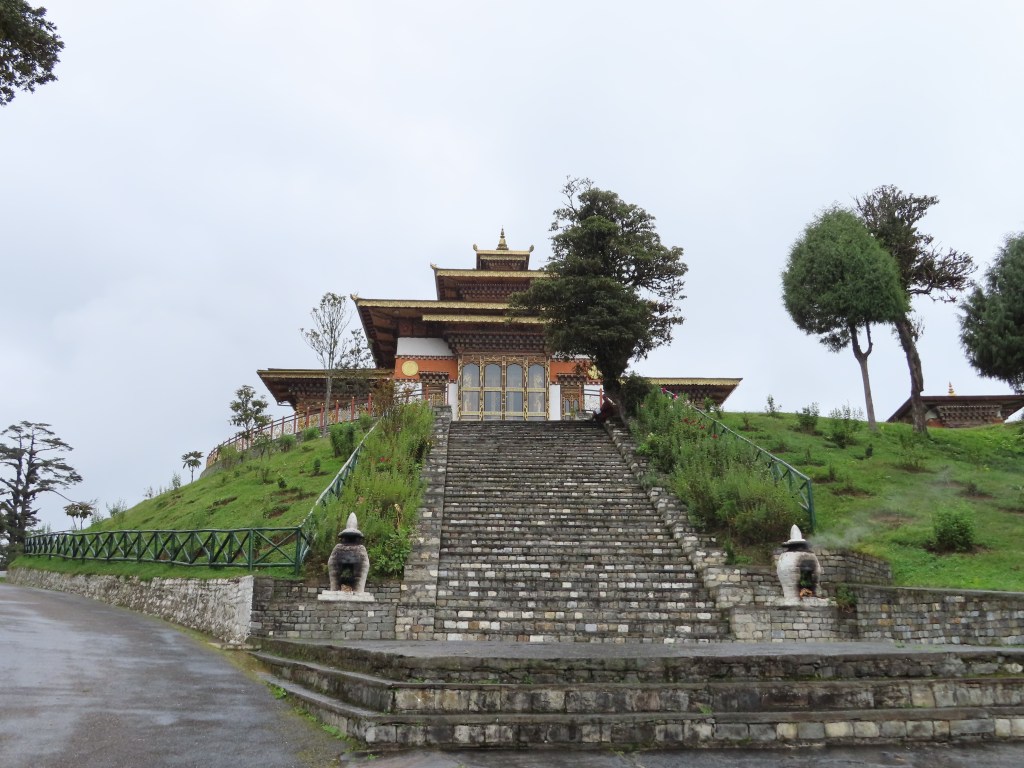
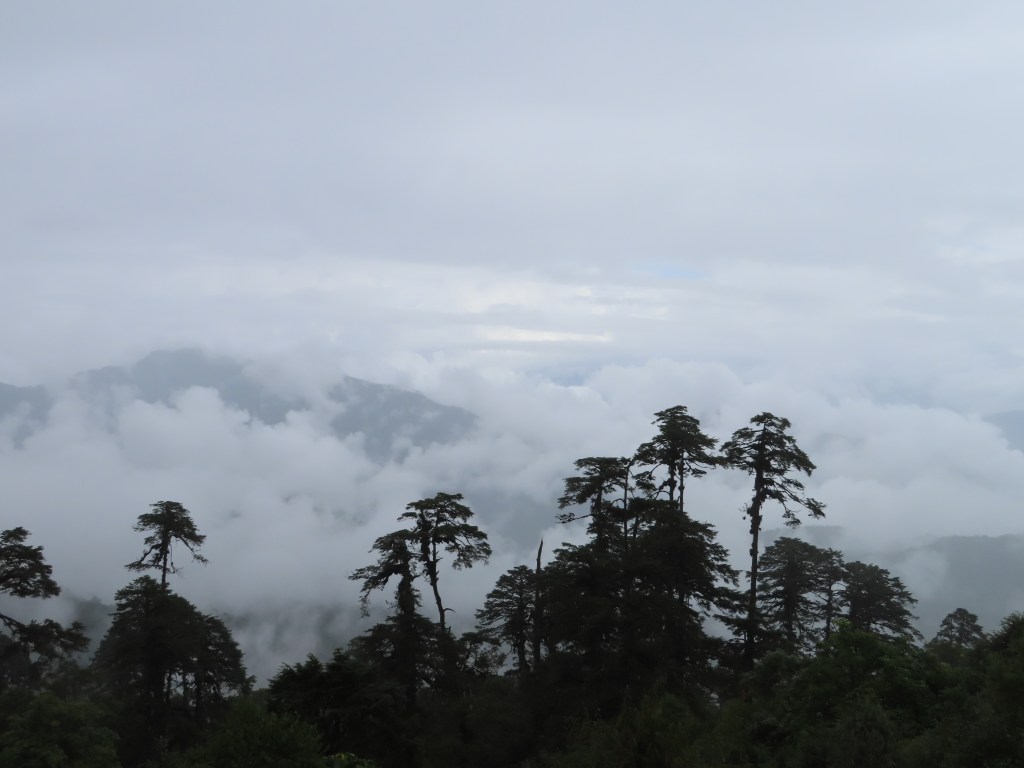
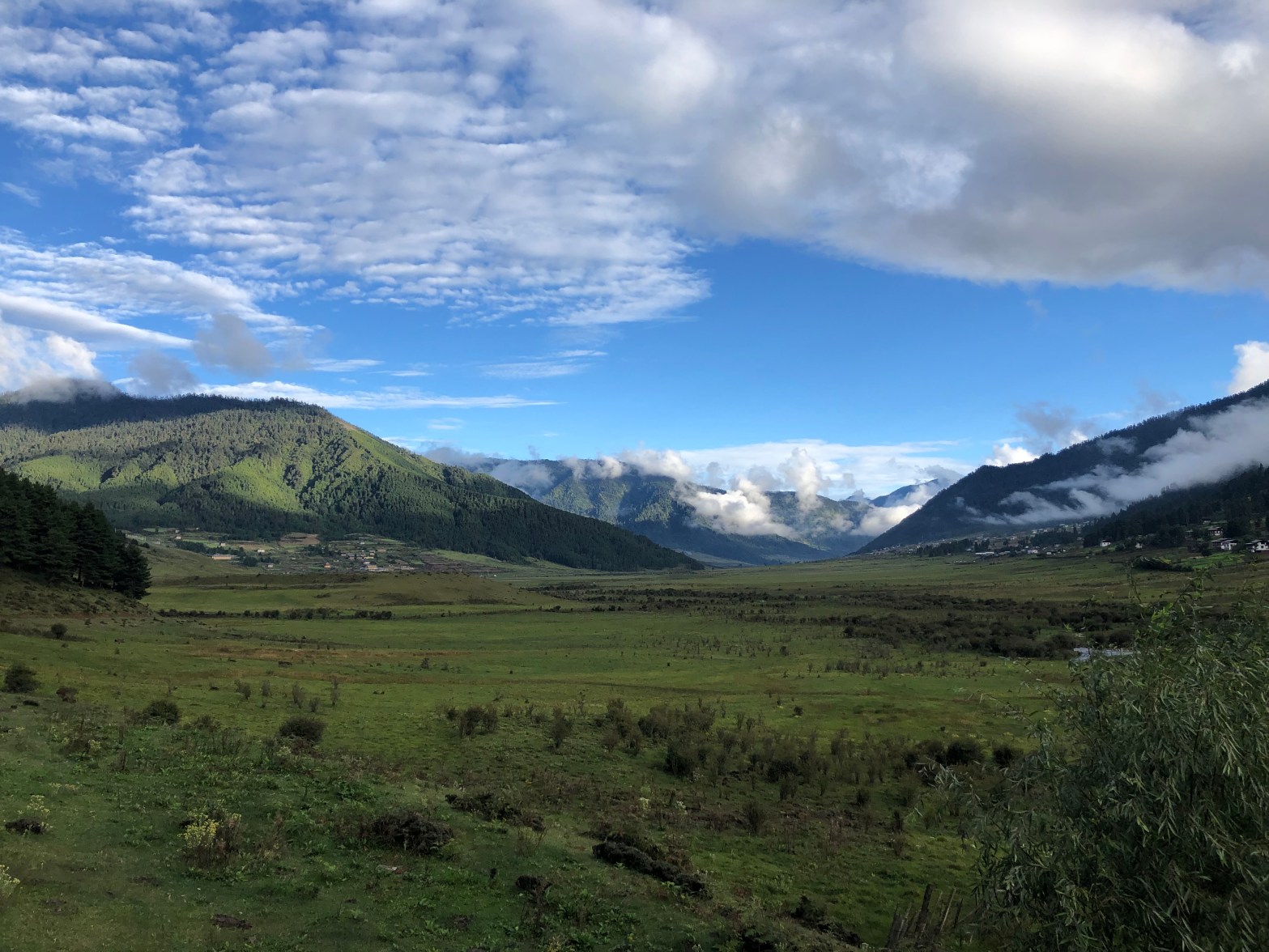
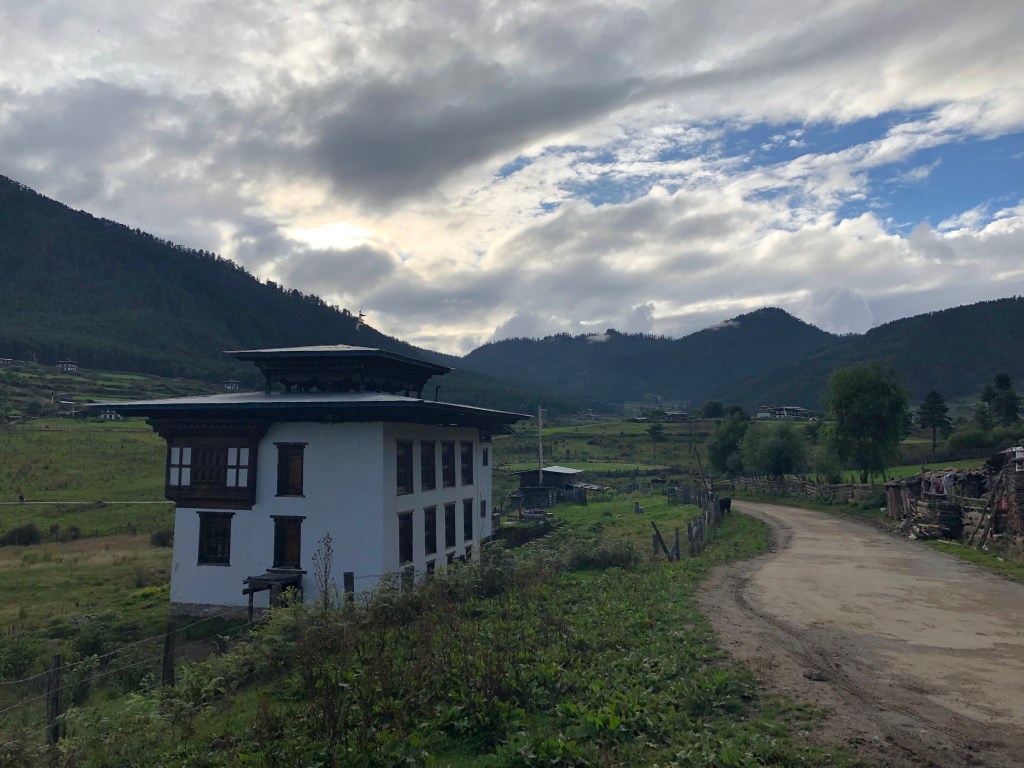
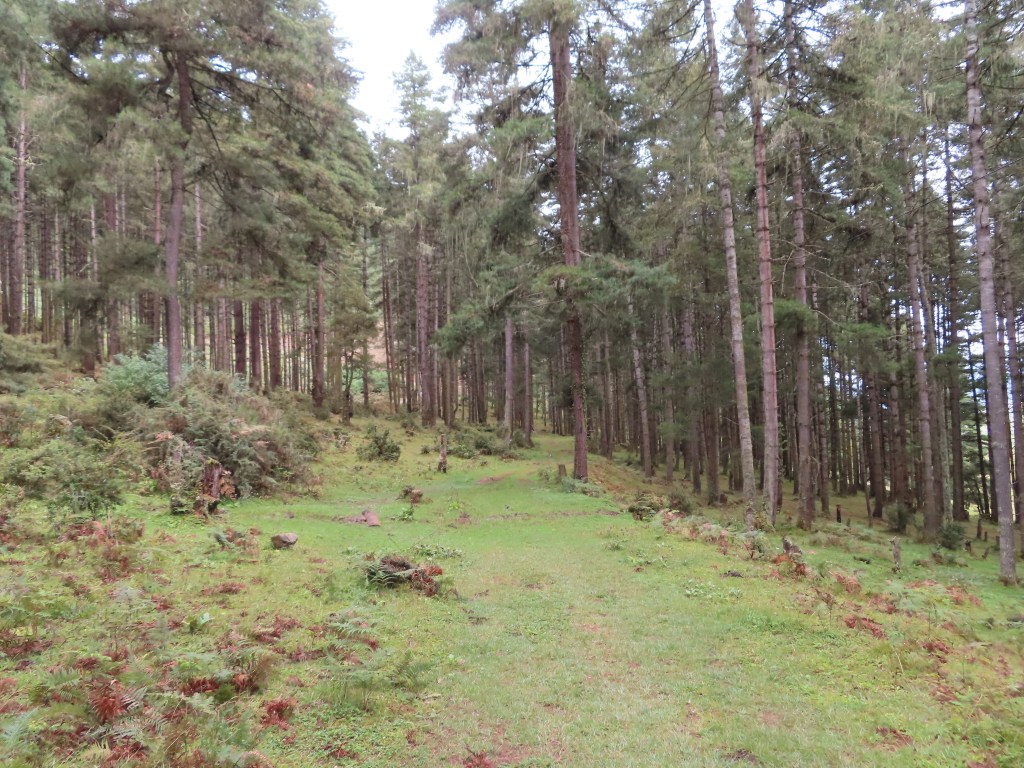
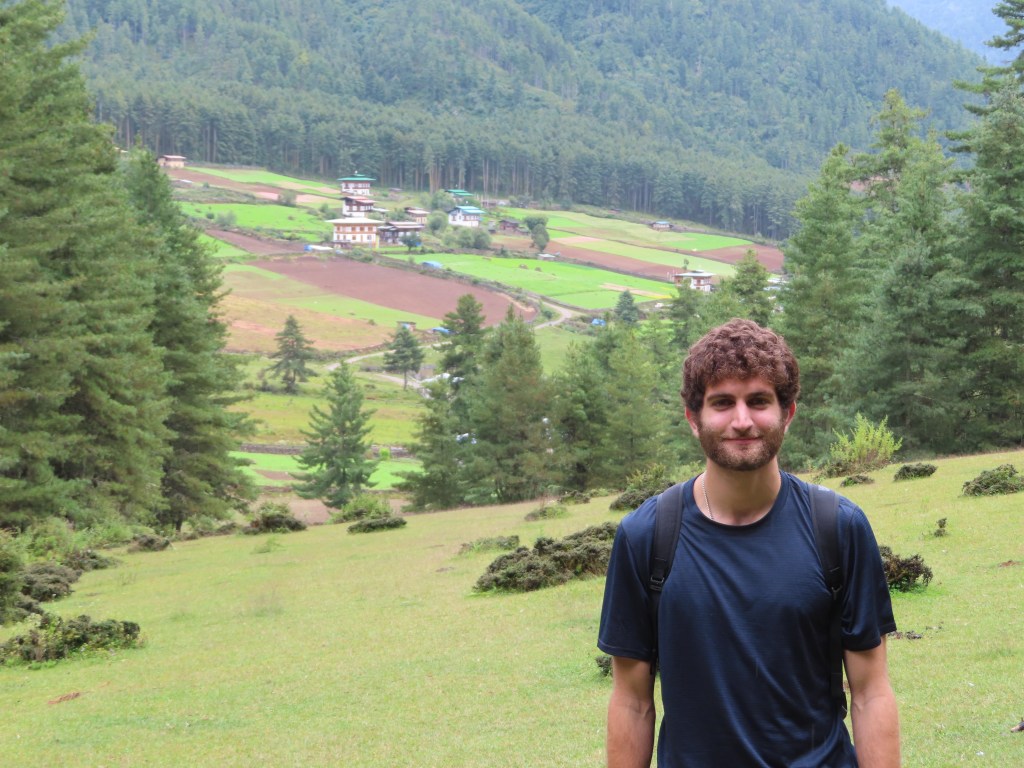
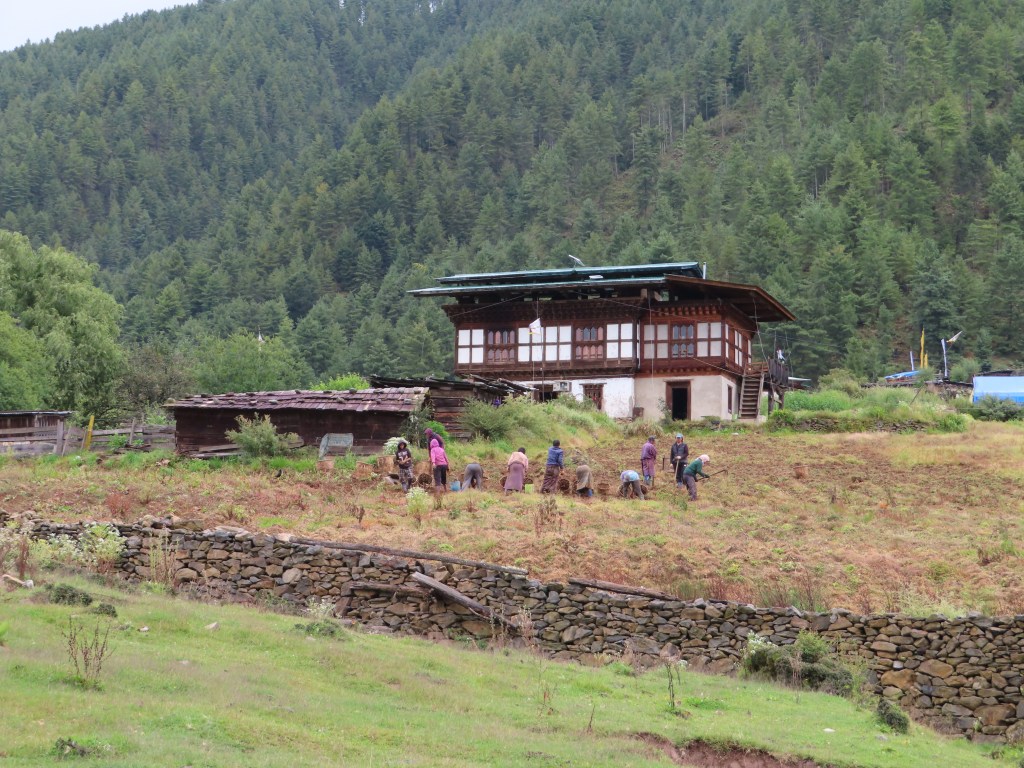
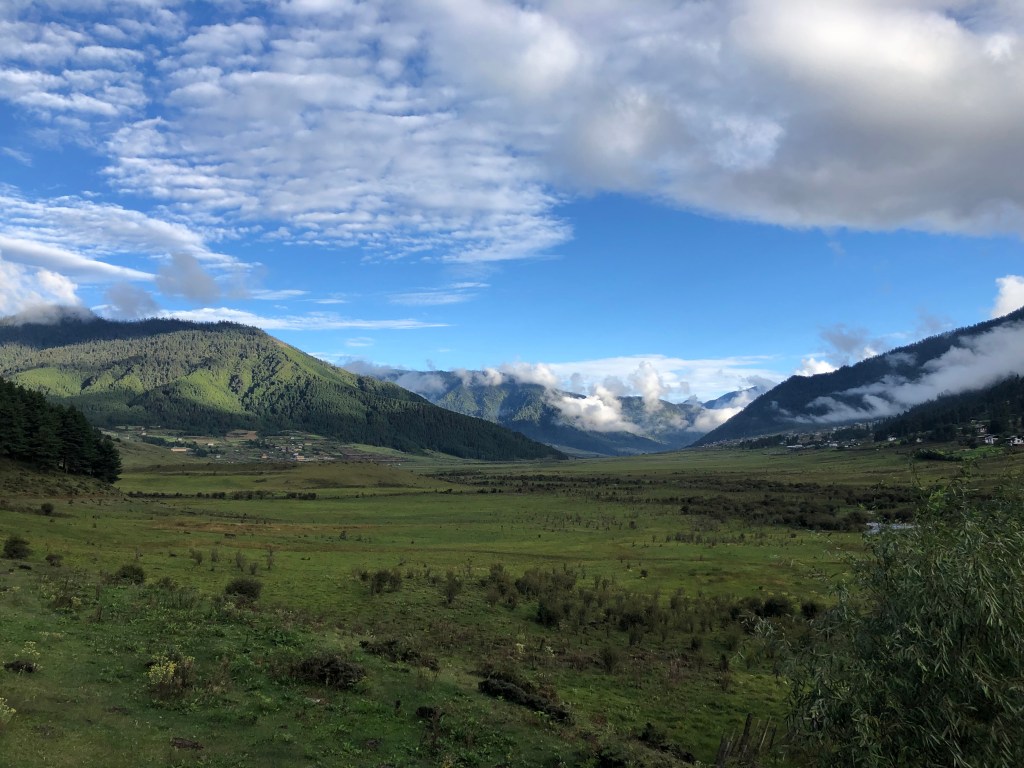
After a ~4 hour drive broken up by stops at a couple temples (of course) and lunch, we arrived in the “high altitude” valley of Phobjikha. At ~9000 feet, it serves as the winter home of the holy black-necked crane from October-February. The valley is beautiful (even with the cranes absent for another month) and we hiked through small villages, wetlands and cow pastures. Later in the afternoon, I went on a beautiful run dodging the “traffic” of cows and dogs along the muddy roads. For dinner, we stopped at a local restaurant and I sampled some strong (8%) Bhutanese beer.
 Aaron's adventures 2.0
Hello Aaron, we are so happy to see you have recovered and on are back on track with your travel adventures. We just love your recounting of the details of your journey. Your writing is so descriptive and we feel like we are there right along side you. We are also learning so much about the culture in the countries you are visiting with your vivid description and photos. You look so much like your dad when he was your age and had a full head of hair. Continue having safe travels and making lifetime memories.
We love you and are sending you lots of hugs.
Syl, Jeff, Lala and Ammie
LikeLike